
Care Matters
Simple, consistent care preserves your knife’s edge, finish, and dependable performance for years to come.
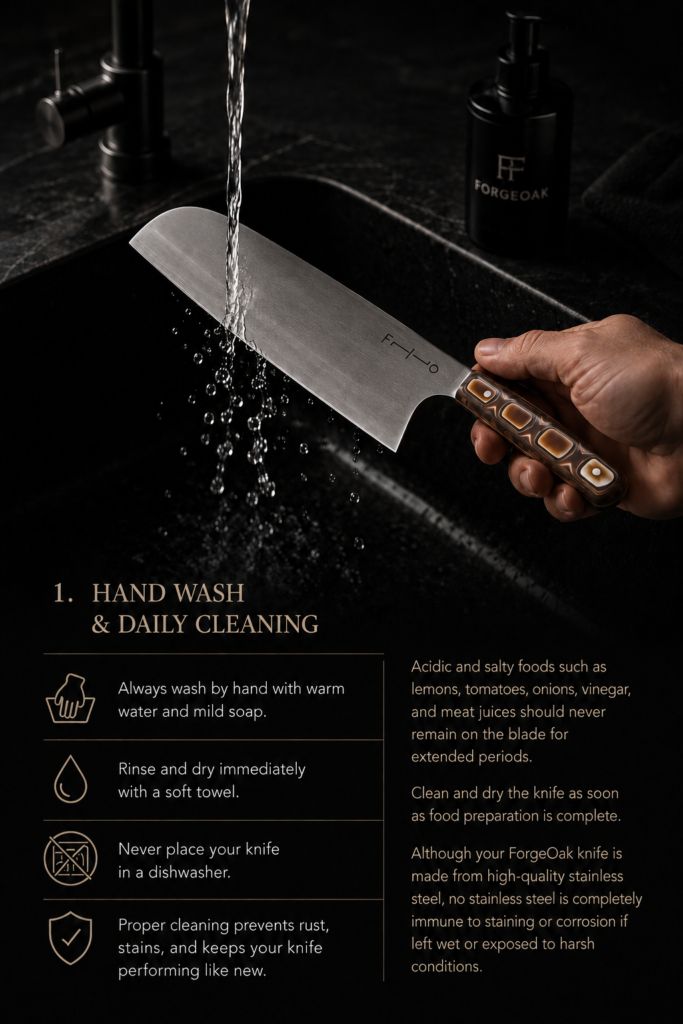
1. Hand Wash & Daily Cleaning
Your ForgeOak knife is a precision cutting tool and should always be cared for by hand.
Never place your knife in a dishwasher. High temperatures, harsh detergents and prolonged exposure to moisture can damage both the blade and handle.
After every use:
- Wash by hand using warm water and mild dish soap.
- Rinse thoroughly to remove food residue.
- Dry immediately and thoroughly with a soft cloth.
- Never leave the knife soaking in water or allow it to air dry.
Avoid leaving acidic or salty foods such as lemon, tomatoes, onions, vinegar or meat juices on the blade for extended periods.
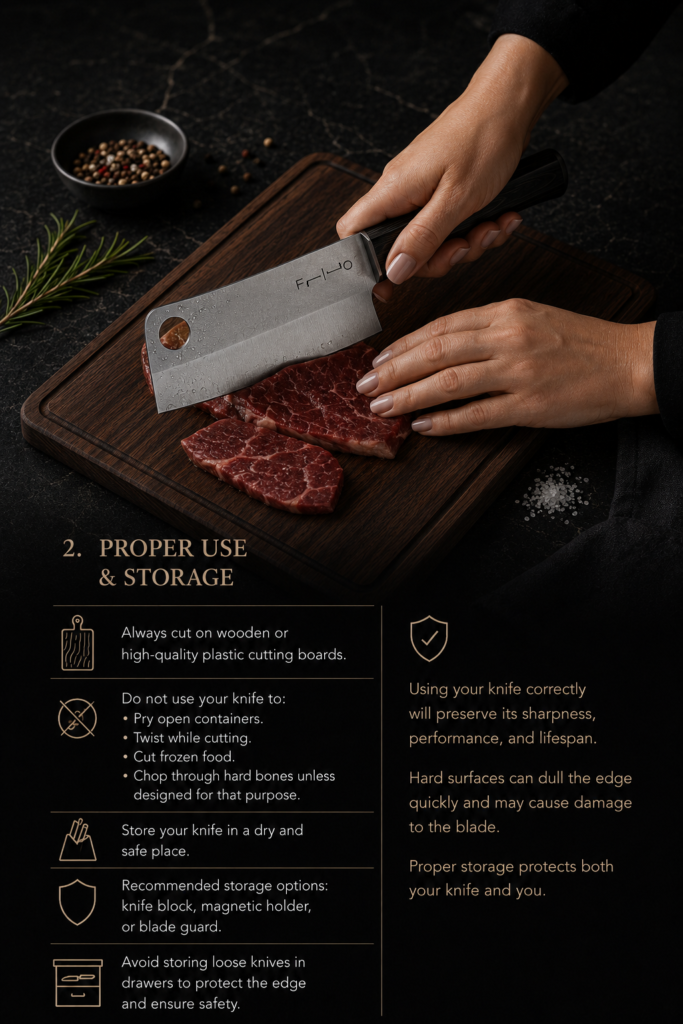
2. Proper Use & Storage
For best performance and edge retention, always use your ForgeOak knife correctly.
- Use a wooden or quality plastic cutting board.
- Avoid glass, marble, granite, ceramic, stone or metal surfaces.
- Do not twist or force the blade while cutting.
- Do not use the knife on frozen foods or hard bones.
- Store your knife safely in a knife block, magnetic holder or protective sheath.
- Always ensure the knife is clean and completely dry before storage.
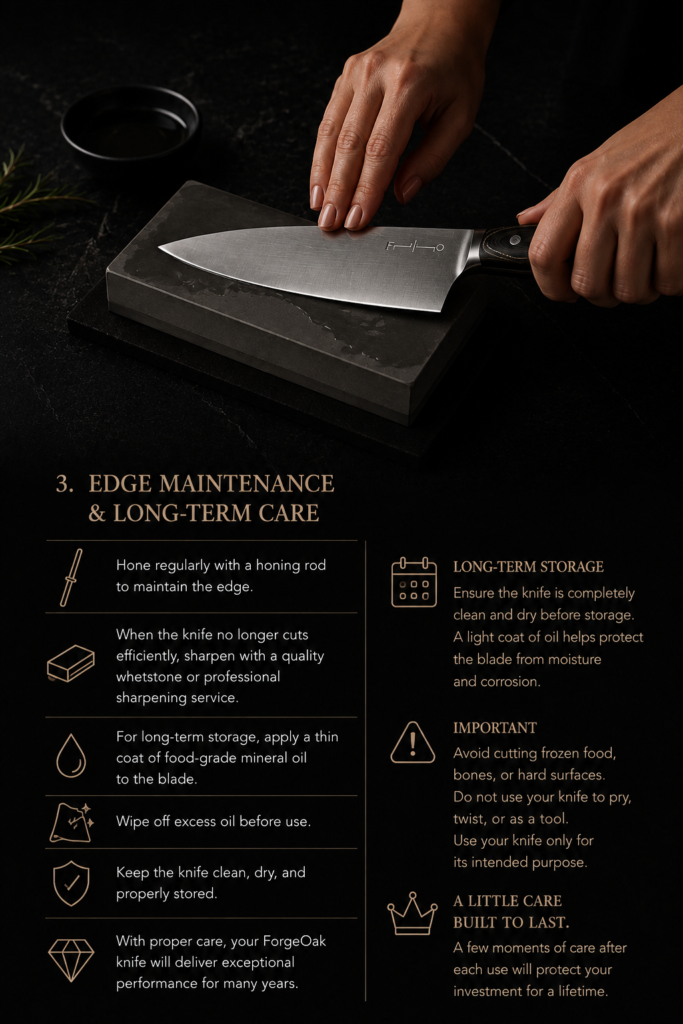
3. Edge Maintenance & Long-Term Care
A well-maintained edge keeps your ForgeOak knife performing at its best.
- Regular honing helps maintain the knife’s edge between sharpenings.
- Use a suitable sharpening stone or professional sharpening service when the edge needs to be restored.
- Avoid low-quality pull-through sharpeners, which can remove excessive material and damage the edge.
- For long-term storage, apply a very thin layer of food-grade mineral oil to the clean, dry blade. Wipe off any excess oil before use.
With proper care, your ForgeOak knife is built to deliver lasting performance, precision and craftsmanship.